

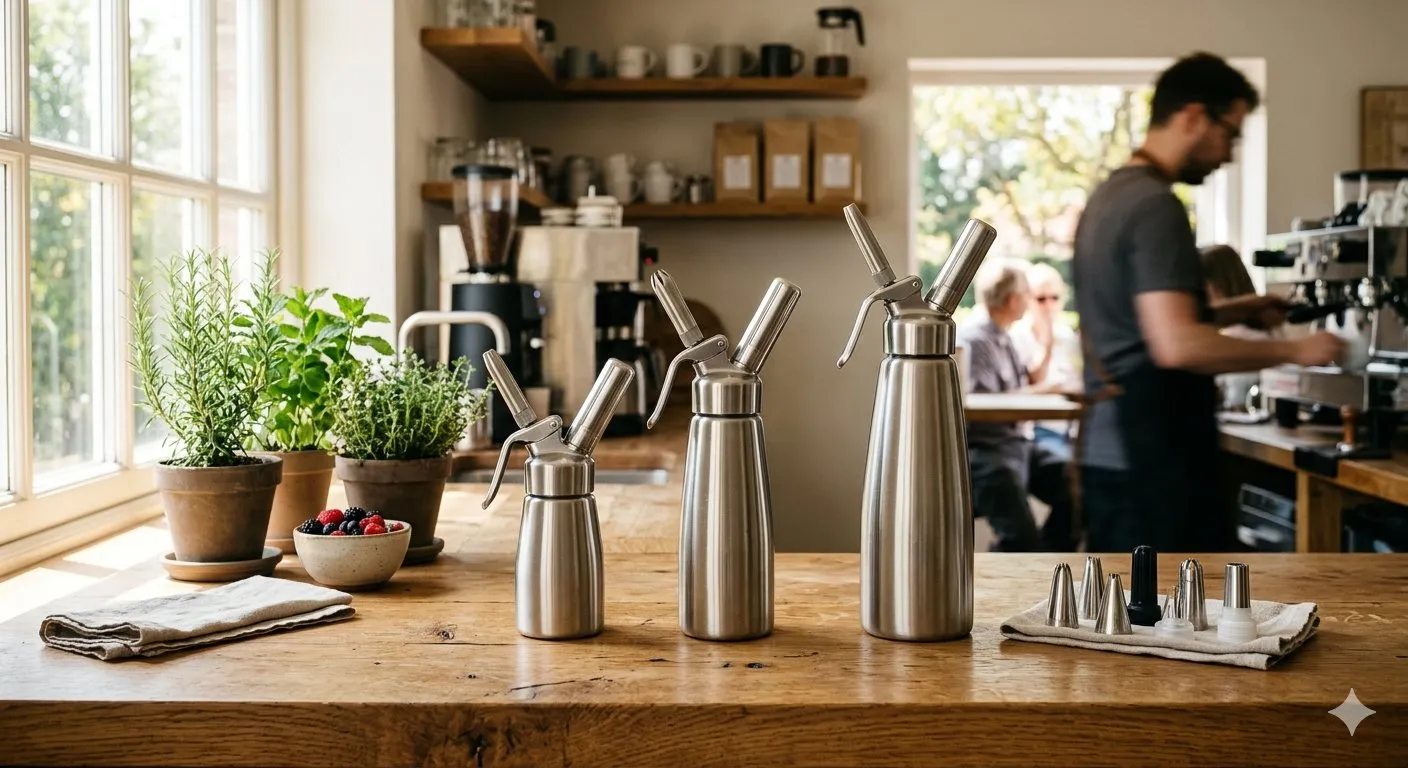
Buying a cream dispenser often looks simple until you compare the many different sizes, materials and prices on offer. The right choice depends on how often you cook, what you plan to make and how much cleaning you are prepared to do. A well-chosen dispenser should last for many years, while a poor one leaks, clogs or produces uneven cream. This guide compares the key features, explains what to prioritise, and helps you match the right model to your kitchen and budget.
Stainless Steel or Aluminium
Stainless steel bottles are heavier, tougher and resistant to dents and stains, so they suit busy kitchens and regular use. Aluminium models are lighter and cheaper, which appeals to occasional home cooks, though they can scratch and dent more easily. Check whether the bottle is rated for your intended use, because some aluminium designs should not hold acidic or hot ingredients. Whatever the metal, look for sturdy construction, smooth interior surfaces and a finish that feels solid in the hand.
Choosing the Right Size
Common capacities are quarter litre, half litre and one litre. A half-litre bottle is a sensible and popular choice for most households, producing enough cream for a family dessert without waste. Small cafés and caterers often prefer the one-litre model, which reduces refilling during service. Quarter-litre bottles suit people who cook only very occasionally or want to make a small flavoured batch. Follow the dispenser’s maximum fill limit. Also distinguish dispensers designed for individual chargers from equipment compatible with larger nitrous oxide cylinders and pressure regulators; these systems are not automatically interchangeable.
Head, Valve and Gasket Quality
The head is the heart of any dispenser, so inspect it carefully before you buy. Look for a firm, well-fitted charger holder with no wobble, a smooth lever and a gasket that sits securely in its groove. Plastic heads are lighter and cheaper but wear sooner, while metal heads cost more and last far longer. Check that spare parts, including gaskets and nozzles, are easy to buy locally. A dispenser without available replacements may become unusable after a single worn seal.
Nozzles and Decorating Options
Most dispensers include a few simple, interchangeable decorating tips, usually star, plain and tulip designs. These let you create rosettes, swirls and neat lines without needing a separate piping bag. Consider carefully whether the tips are metal or plastic and whether they are simple to remove, rinse and clean. Some bottles also include a long tube or a syphon attachment for filling glasses and cups. If you decorate cakes quite often, choose a model that offers a broad selection of useful tips.
Cleaning and Maintenance Features
Dispensers can be tricky to clean, so choose a design with parts that come apart easily and quickly. A wide opening makes it simpler to reach inside with a brush or cloth, and a cleaning brush supplied in the box is a useful extra. Check whether any of the parts are dishwasher-safe and whether the manufacturer provides clear care instructions. A model that is easy to clean is more likely to stay hygienic, and good hygiene directly affects both flavour and safety.
Safety Certifications and Standards
Pressure vessels need to be very well made and tested, so look for clear markings, a reputable manufacturer and compliance with relevant safety standards in your country or region. Always choose bottles with clear descriptions, good reviews and full, clear safety information. A good product should include a manual with instructions on filling, charging, releasing pressure and cleaning the equipment safely. Always read the manual before first use, because faulty or misused pressure equipment can cause genuine and serious injury.
Budget and Warranty
Prices vary widely, and the cheapest option is often the most expensive choice in the long run. Set a realistic budget first, then compare warranty terms, the availability of spare parts and genuine customer reviews. A well-known brand with a multi-year warranty offers real peace of mind, particularly for commercial kitchens that use a dispenser daily. Always buy from a seller with a clear returns policy and easy contact details, so you have somewhere to turn if something should ever go wrong.
Conclusion
The best cream dispenser is one that fits its intended recipes, service volume and cleaning routine. Material, size and the availability of replacement parts all matter, but compatibility with the charging system deserves equal attention. Individual cartridges and larger cylinders cannot be treated as interchangeable without the equipment manufacturer’s approval. Buyers exploring food-grade culinary gas products can compare information at smartwhip.eu. A thoughtful purchase decision prioritises safe operation and maintenance over impressive-looking specifications or the lowest advertised price.