

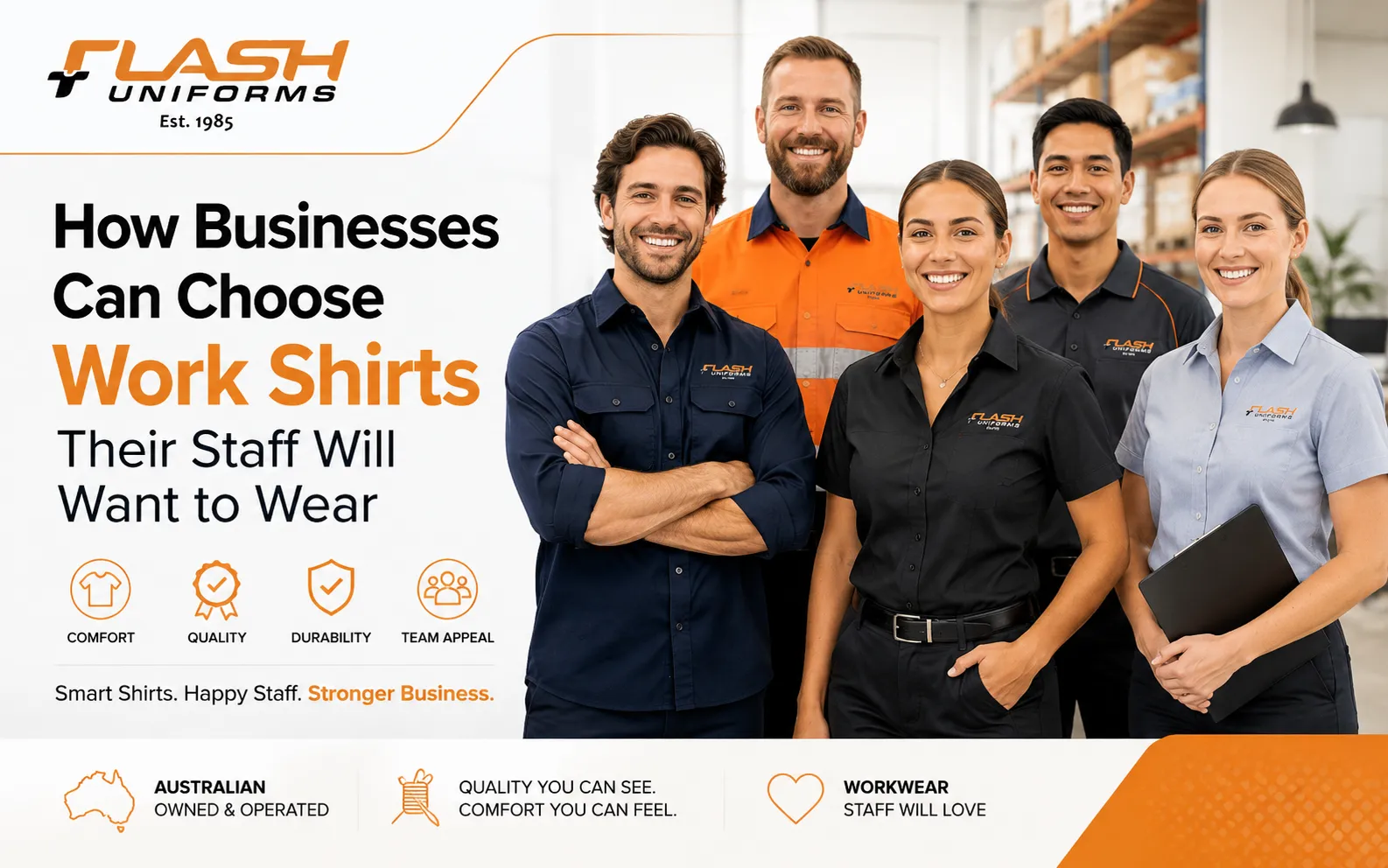
Uniform decisions look simple from the outside: choose a shirt, add a logo, order the sizes and hand them out. In practice, staff notice almost immediately when a uniform is uncomfortable, impractical or wrong for the work they actually do — and a uniform people dislike wearing is one they’ll quietly work around.
The best work shirts carry people through long shifts, changing temperatures and the physical demands of the role while still presenting the business consistently. When staff are comfortable in what they wear, the uniform becomes a genuine part of the working day rather than something they tolerate. For businesses reviewing their workwear uniforms, the aim is to balance comfort, durability, appearance and job-specific needs — not to choose on price or style alone.
Start With the Work Your Staff Actually Do
Different jobs place very different demands on clothing, so uniform selection should begin with the job rather than the catalogue. A warehouse worker spends the day lifting, bending and moving between areas; a technician may be indoors and outdoors in a single shift; a tradesperson needs freedom of movement in a garment tough enough for physical work; and front-of-house staff have different priorities again.
Before choosing shirts, think about how much your people move through the day, whether they work indoors or outdoors, the temperatures they face, whether the role involves machinery or gets clothing dirty, whether visibility requirements apply, and whether staff meet customers. A shirt that suits a reception desk may be wrong on a construction site or in a workshop — and once the job is clear, the right clothing is far easier to identify.
Make Comfort a Real Priority
Staff often wear their uniform for eight hours or more, so small comfort issues become significant over a full shift. Fabric weight, breathability, seam placement and fit all shape how a shirt feels by the end of the day.
Lightweight, breathable fabrics help in warmer environments, while in cooler conditions a shirt may need to work as part of a layered system. Just as important is how the garment feels in motion — a shirt that’s fine standing still can pull and restrict once someone repeatedly reaches overhead, bends or carries equipment. Where you can, letting a small group of staff trial garments before a large order gives you honest feedback on exactly this.
Choose a Fit That Allows Natural Movement
Modern workwear usually offers several fits rather than one standard cut, and since staff have different body shapes and preferences, giving them suitable sizing options improves comfort noticeably. A good work shirt allows natural movement without leaving so much loose fabric that it gets in the way during physical tasks.
When reviewing work shirts, consider how the garment performs during real workplace movements — reaching, bending, lifting, driving, climbing, carrying tools or working at a desk. The ideal fit often depends on the role: someone working around equipment may want a more streamlined garment, while a worker doing repetitive physical tasks may need extra room through the shoulders and arms.
Offer the Right Sleeve Options for the Year
There’s rarely one sleeve length that suits every employee or every season. Short sleeves work well in warm environments and for active tasks; long sleeves add coverage and suit cooler conditions, and some teams benefit from having both available.
Giving staff appropriate seasonal options keeps the uniform practical all year, and it reduces the temptation to fall back on non-uniform clothing simply because the supplied garment doesn’t suit the weather. That consistency is worth more than it first appears when you’re trying to maintain a uniform look across seasons.
Look at How the Fabric Performs Over Time
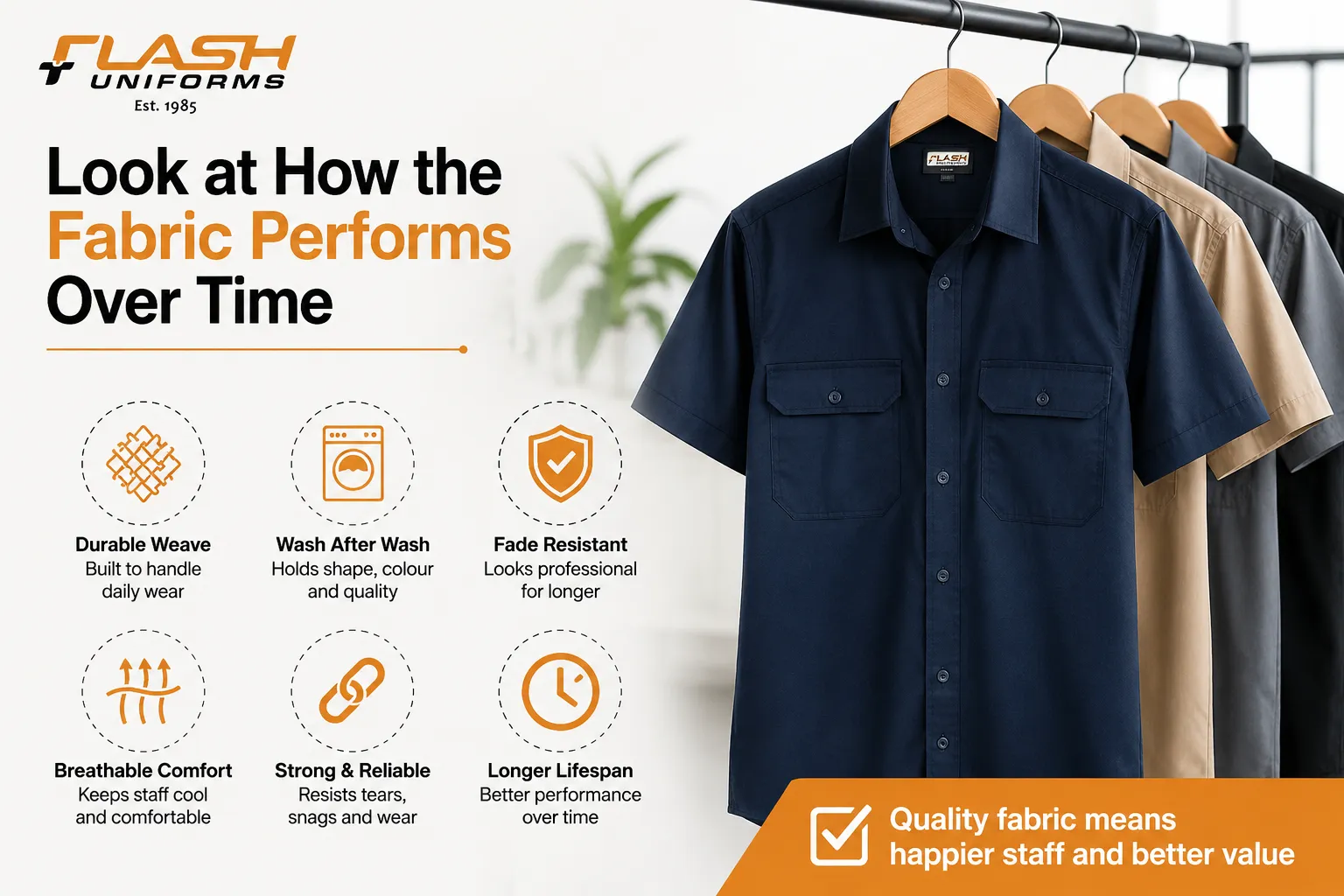
Fabric does a lot of the work in how a shirt holds up, so judge it on more than how it feels when new. Work clothing gets washed often, exposed to dirt and worn through demanding shifts — and the material has to keep performing through all of it.
Useful qualities include breathability, durability, easy washing, resistance to everyday wear, and good colour and shape retention, alongside an appropriate fabric weight for the setting. The right balance depends on the workplace: a lightweight shirt may be ideal in a hot warehouse, while heavier fabric makes more sense where garments regularly meet rough surfaces.
Add Only the Features Staff Will Use
Small design details can make a real difference — pockets for pens, small tools or ID cards; button fronts; ventilation; adjustable cuffs. But more features don’t automatically make a better shirt. The useful ones are the ones that match how your staff actually work.
Before adding a feature because it sounds practical, ask whether people will genuinely use it during normal tasks. Good workwear simplifies the working day rather than piling on details that add cost without earning their place.
Make Branding Visible Without Making It Uncomfortable
Uniforms carry the brand, and a well-presented team creates a consistent impression on client sites, with customers and in public. But branding should complement the garment, not dominate it. Logo size and placement — commonly left or right chest, sleeve or upper back — should suit how the shirt is used and how visible you want the branding to be, and embroidery suits some garments while print works better on others.
Comfort matters here too: large areas of heavy decoration can make a lightweight garment feel stiffer and less breathable, so it’s worth weighing how the branding sits against the fabric it’s on.
Choose Colours That Work in the Real Workplace
Corporate colours can look great on a website and be impractical as everyday work clothing. Very light colours show dirt quickly; very dark ones absorb more heat outdoors. Weigh your brand identity against the realities — workplace conditions, washing frequency, visibility needs, and whether staff work around dust, grease or dirt.
Often a neutral garment carrying your branding strikes a better balance than trying to match every element of the corporate palette in the fabric itself. It keeps the team looking consistent without fighting the conditions they work in.
Ask Your Staff Before You Order
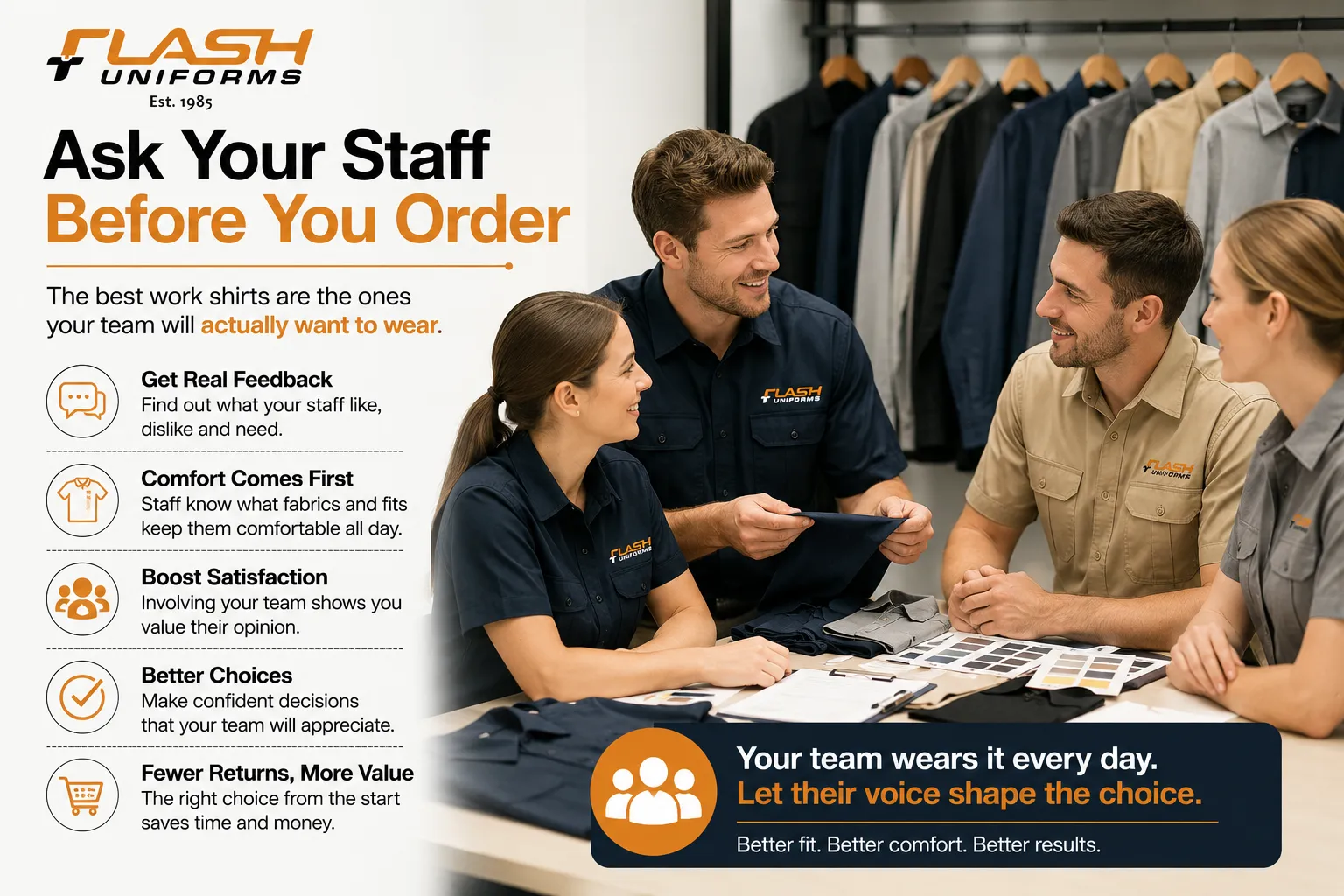
One of the easiest ways to improve a uniform program is also the most overlooked: ask the people who’ll wear it. Staff routinely spot practical issues that purchasing teams miss — whether the shirt stays comfortable all day, whether there’s enough room to move, whether the pockets are useful, whether the fabric suits workplace temperatures, whether the sizing works, and whether another sleeve option would help.
A short trial before a large order can save you from committing to a big run of shirts your team ultimately dislikes — which is both a cost and a morale issue you can avoid cheaply.
Think in Cost Over Time, Not Just Purchase Price
Budget matters, especially at scale, but the cheapest shirt isn’t always the lowest-cost choice. A garment that loses shape, fades or wears out fast simply gets replaced more often. A more useful comparison weighs purchase price against expected lifespan, washing requirements, replacement frequency, staff comfort and suitability for the role — aiming for value across the garment’s usable life rather than the lowest number upfront.
Keep Ordering Simple as the Team Grows
Uniform programs get more complicated as you hire. Keeping basic records of garment styles, colours, branding positions and approved product codes makes future orders far easier and ensures new staff receive clothing that matches the existing team. It’s also worth reviewing your uniform requirements periodically — changes in roles, locations or conditions can mean clothing chosen years ago is no longer the best fit.
Final Thoughts
Choosing work shirts staff genuinely want to wear takes more than picking a professional-looking garment. It means thinking about how your people move, where they work, what temperatures they face and which features they’ll actually use — with fit, fabric, sleeve length, durability and branding all working together.
Employee feedback and a small trial before a larger order are among the most valuable steps, because they reveal how a shirt performs in real conditions rather than on a display. When work shirts are comfortable, practical and right for the role, staff wear them confidently — and the business gets the consistent, professional team appearance it wanted in the first place.